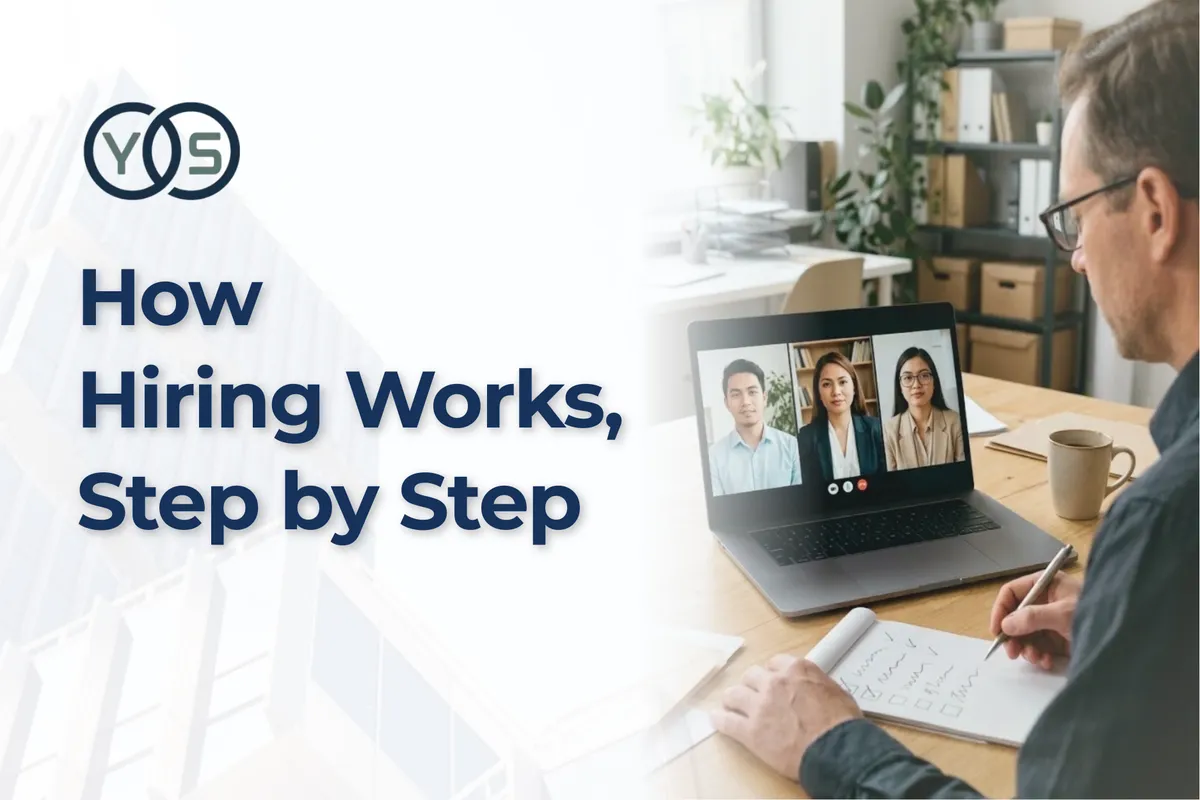
How Hiring Works, Step by Step
From first call to placed assistant, with pre-vetting built in.
In Who Not How, Dan Sullivan and Benjamin Hardy make an argument that lands hard on anyone running a small company. When something needs doing, most of us ask how we'll get it done. The better question is who will do it. Asking how to keep the job on your desk. Asking who moves it to someone whose whole week is built around that kind of work.
The catch is that finding who is itself a job, and usually a miserable one. Job posts, a hundred applications, interviews that go nowhere, a hire who quits in week six. That's the part owners dread, and it's the part we take on.
We're Yoked Staff, a virtual assistant agency run out of Utah. Recruiting, vetting, training, and placing remote talent across marketing, admin, and bookkeeping is the whole of what we do. Here's the path from your first conversation with us to someone sitting inside your business, start to finish.
Step 1. A free consultation
We start with a conversation about your week, not a pitch about ours.
Bring the parts of your business that keep slipping. Maybe estimates go out late. Maybe your social accounts have been quiet since spring. Maybe invoices get sent whenever you remember. We'll walk through what you handle personally, what you've tried to hand off before, and which tasks repeat often enough that someone else could own them.
Out of that comes a rough shape for the role: the specialty, the hours, the tools involved, and the first few things you'd want taken over. If what you need falls outside what we place, we'll tell you plainly rather than talk you into a fit that isn't there.
You leave the call with clarity on the role. No commitment, no contract, nothing signed.
Step 2. We shortlist vetted talent
Here's where most of the work happens, and where you see almost none of it.
Our recruiters go into the market with the role you described. Candidates are screened against the actual brief rather than a generic job title, so somebody who runs email campaigns well doesn't land in front of you for a bookkeeping seat.
Everyone who gets through screening completes the same checks before their name reaches you:
Skills assessment. Practical tests in the tools the role runs on, plus a portfolio or work-sample review where the job calls for one.
Communication check. Written and spoken English assessed properly, since remote work lives or dies on clear updates.
Reference checks. Conversations with people who've managed them, about reliability and how they handle correction.
Background verification. Identity and history confirmed before placement.
By the time a shortlist exists, every person on it has cleared all four. That's the meaningful difference between working with us and posting the role yourself: you're choosing among people who've already been tested, instead of guessing from resumes and hoping the interview tells you something true.
Step 3. You meet each candidate and choose
We shortlist. You decide. That order matters, and we don't blur it.
You'll sit down with each finalist on a call and ask whatever you want. Walk them through a real scenario from your business. Ask how they'd handle an unhappy customer, a messy spreadsheet, or a week where three things are due at once. Watch how they think out loud.
Owners often tell us the conversation itself is where their confidence arrives. Reading about someone's experience is abstract. Hearing them describe how they'd approach your actual workload is concrete, and you can usually feel within a few minutes whether the two of you will work well together.
If nobody on the shortlist feels right, say so. We'd rather go back out and find a better match than place someone you were lukewarm about, because a lukewarm start rarely improves.
Step 4. Placed and supported
Your chosen hire joins your business and starts on the tasks you named back in step one.
Onboarding is structured rather than improvised. They get access to your tools, a written brief of their first responsibilities, and a check-in rhythm so you're not wondering what happened all week. The admin side sits with us: payroll, contracts, compliance paperwork, and time tracking.
Support continues after that first month, which is the part people are surprised by. We stay in the relationship. Performance reviews happen. Coaching happens when something needs correcting. If someone is out, we arrange coverage. If the match turns out wrong despite everyone's best read, we replace them rather than leaving you to absorb it.
Where your hours actually go
Count what the four steps ask of you: one consultation, a handful of candidate conversations, and a week of showing someone how your business runs.
Compare that against hiring independently. Writing and placing the ad, reading applications, first-round screens, second-round screens, skills tests you have to design, reference calls, contracts, and payment setup. Owners who've done it describe weeks of evenings, and the work that prompted the hire sits untouched the whole time.
That gap is the real product. Not the person alone, but the person plus the machinery that found, tested, and now supports them.
Where to start
The hardest part of asking who believes that a good candidate exists and is findable. That belief tends to arrive during step three, when you're talking to a qualified professional who already understands the work you described.
Bring us the version of your week that isn't holding together. We'll shape the role, test the market, and put finalists in front of you. No long-term contract.
Book a free consultation.